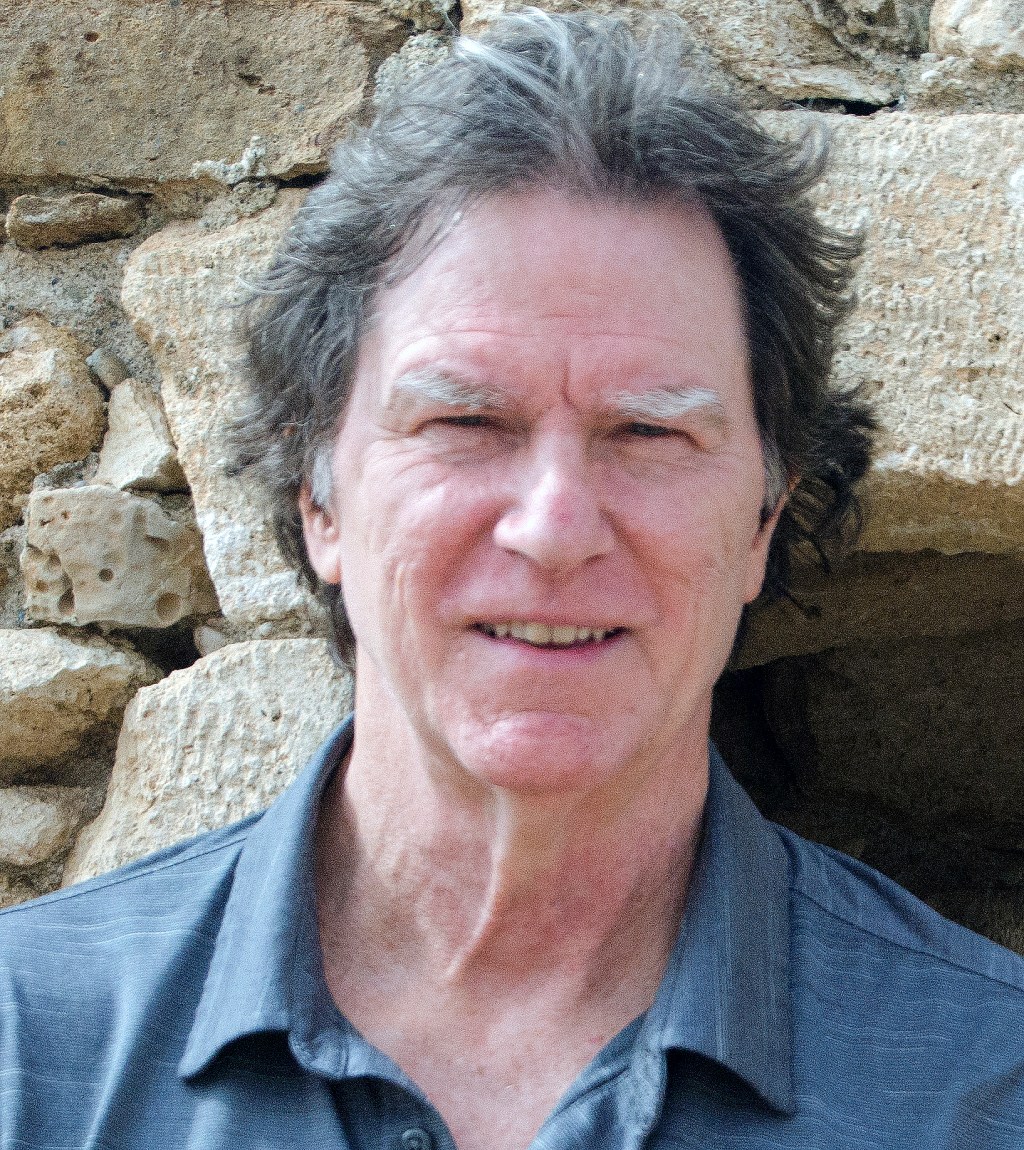

Starfarer’s Cafe recently sat down to talk with science fiction author Jon Adcock, whose short story Homecoming recently appeared in our digital magazine. Jon loves alt-rock, Akira Kurosawa movies, and craft beer. He lives in California with his wife and two kids.
Q: When did you first get interested in science fiction – and then in writing it?
From the beginning, I was a precocious reader who read well above my grade level, and I used to borrow my older brother’s books. The first sci-fi book I read was his copy of Phillip Nowlan’s Armageddon 2149 A.D. (the original Buck Rogers novel). After that, I read all the rest of his sci-fi books (along with a few other books I probably shouldn’t have read at that age). I did write a bit in middle school but never pursued it as I got older. Two or three years ago, I finally decided to give it another try. Speculative fiction is what interests me the most, and I can’t see myself writing anything else.
Q: What authors or books (science fiction or otherwise) have influenced your writing the most?
I really don’t know if my writing is “influenced” by anyone, but the authors I’ve loved most were the new-wave writers of the 1960s and 1970s – Le Guin, Zelazny, PKD, Delaney, Ellison, Alice Sheldon, Aldiss, Ballard, Butler, etc.
Q: Your story talks about a major social problem of our time: Servicemen readjusting to civilian life after a war. Do you feel science fiction has a responsibility to comment on current social or technological issues?
Definitely. Dystopian classics like 1984, Brave New World, Stand on Zanzibar, and Parable of the Sower are all the more powerful because of their social commentary. Science fiction, especially dystopian sci-fi, should straddle both the present and the possible future.
Q: What was the spark behind your story?
A: With the exception of The Forever War, few science fiction books or movies have dealt with time dilation. In most stories or TV shows, a trip to another planet is treated like a run to the corner store. I wanted to show what the reality could be – aging only a few subjective years while everyone you know on Earth ages dramatically more. I also know a few Vietnam vets, so the experience they had of coming home after fighting in an unpopular war influenced that part of the story.
Q: In science fiction, a lot of times authors have to make up terms for technology that doesn’t yet exist. You do that in your story. What’s your approach to coming up with terms like that?
Not to get too cute. Whenever I’ve had to make up a term in one of my stories, I’ve tried to figure out what would be a natural evolution of language, what something would be called, and what the slang variations of it would be.
Q: What worldbuilding tips do you have for writers looking to convincingly establish elements like high concept technologies, alien worlds, and other imagined scientific innovations in their stories?
Try to keep it realistic, especially when it comes to technology. Magic has a place, but not in sci-fi.
Q: What areas of scientific developments interest you most?
Space travel. The stars shine above us, and our reach exceeds our grasp (to paraphrase Browning)
Q: What’s your favorite science fiction novel?
Whether it’s books, movies, or music, I don’t have a single favorite. Some of my favorites:
Dune
Lord of Light
Shadow of the Torturer
Brave New World
1984
Fahrenheit 451
Neuromancer
Do Androids Dream of Electric Sheep
Wildseed
The Left Hand of Darkness
The Forever War
The Stars My Destination
The Time Machine
Q: What’s the best piece of writing advice you’ve ever received?
Criticism is a good thing. You can’t improve if you don’t know what isn’t working. Starting out, whenever I gave a story to a friend to read and critique, I always said: “Be honest.”
Q: What advice would you give to aspiring science fiction authors?
Just write. To quote Edgar Rice Burroughs: “If you write one story, it may be bad; if you write a hundred, you have the odds in your favor.”