
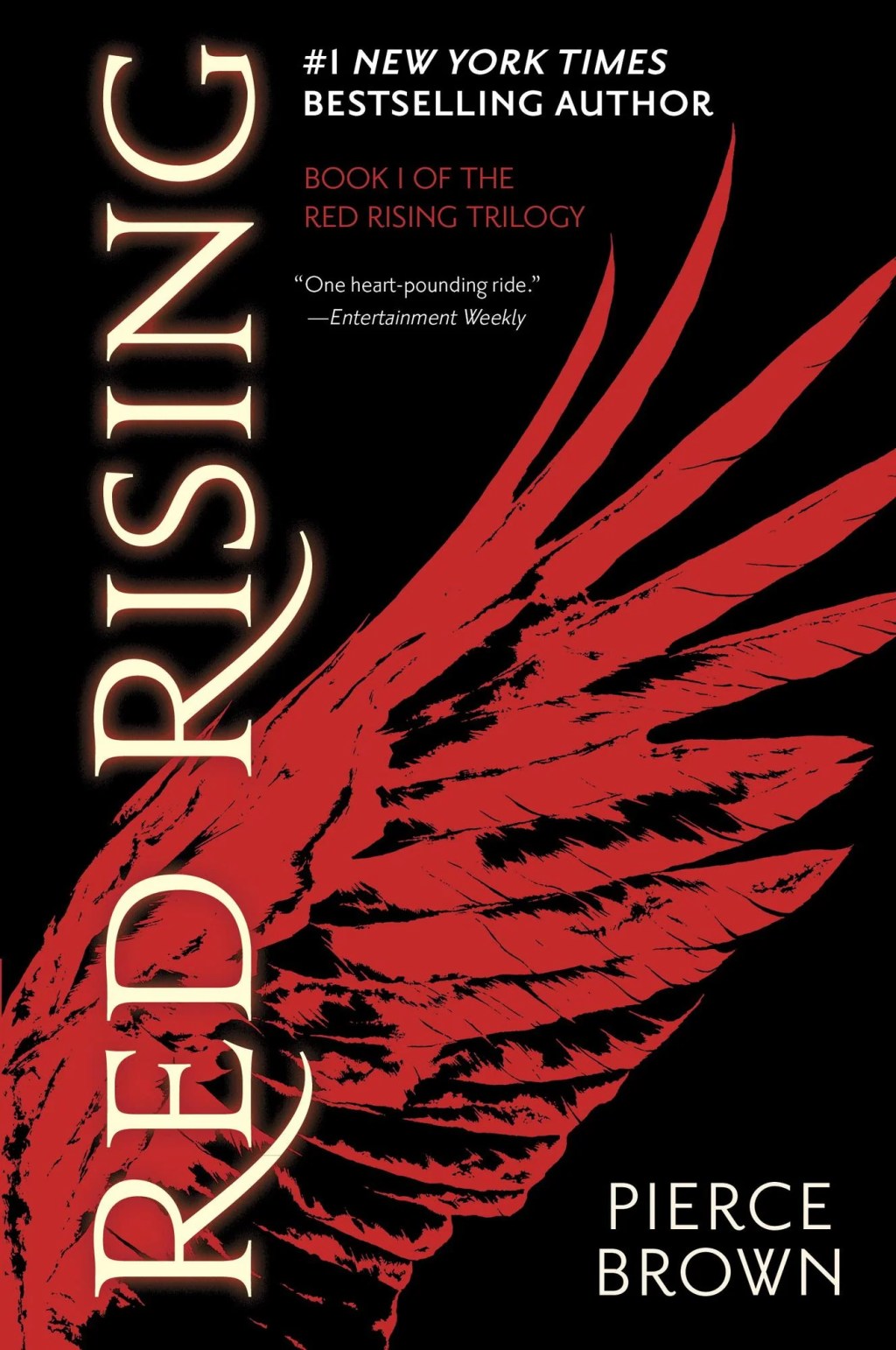
Among the biggest selling science fiction books of the past 12 years is Red Rising by Pierce Brown. It regularly ranks high on Amazon’s bestselling charts and can be found prominently displayed in any bookstore worth its salt. Commercial success, though, is not necessarily a sign of good science fiction, however.
If you like the current trend of dystopian sci-fi – stuff like Divergent, Hunger Games and The Maze Runner – that dominates the genre, then this a great book. It tells the story of sixteen-year-old Darrow, who is a Red, which is the lowest caste in the color-coded society of the future. Like his fellow Reds, he works all day in the mines, believing that he and his people are making the surface of Mars livable for future generations.
After a personal tragedy, Darrow discovers that Mars is already thriving and inhabited by the ruling elite – the Golds – who have enslaved his people. Genetically and physically transformed into a Gold, Darrow enters the Institute, a brutal, Roman-themed survival academy, to tear down the system from the inside. It is the first in a trilogy, which includes Golden Son and Morning Star.
To the Brown’s credit, the pacing is relentless, and the battle scenes intense. If you need a little escapism, this book will nicely scratch that itch.
For this long time science fiction fan, however, the book is a bit lacking.
First, there’s nothing original in it, just retreaded tropes from dozens of YA and dystopian novels. Sure, science fiction often reuses tropes, but great science fiction adds a new twist to them. It continues the conversation by saying “Great idea, author of Book A, but what if this were different…” and hence you get Book B. All I heard when reading Red Rising is “Yeah, what those guys said – they’re right!”
Another sign of impressive science fiction is the use of a new novum (or at least using it a unique way). But I’ve seen all of the tech and extrapolated science in Red Rising employed in hundreds of other novels, short stories, and TV shows. Further, Brown didn’t spend a lot of time worldbuilding other than transplanting Roman history and mythology onto a Martian colony, but alas that has been done as well (consider Star Trek’s Romulans).
The message of Red Rising centers on the dangers of systemic oppression, the destructive cost of revolution, and the compromises required to tear down an unjust status quo. Ho-hum. Unless you’re younger that fourteen years old, you’ve already read all of that. Not that those themes aren’t relevant, but Brown doesn’t do anything interesting with them. In any case, he can’t have much of a discussion about them; his plot demands that the destruction and compromises be allowed so that the oppression can end. After all, Darrow can’t very well say, “The cost is too high, so we’ll just allow the oppression to continue.”
If looking for a little melodramatic escapism or if you’ve read very little science fiction, Red Rising is a fine enough book and worth your time. If looking for some meaningful science fiction or if you’ve read a lot of it, Red Rising sadly is worth a pass – it’s just Hunger Games set on Mars.
Rory Hawkins is a long-time science fiction fan in Atlanta, Ga.